
Gardening like writing requires time and much of my time this year has been a rollercoaster of reacting to crises, sadness and responding to other people’s needs. There is no point in complaining; to be alive and to love; is to hurt and this year has been full of loving and hurting. There has been lots of laughter lots of loving and lots of crying.

I was reflecting on this recently when, coffee in hand I stood, soaking up the Spring morning sunshine, surveying my realm. I say realm but truly it is a very small inner-city garden and this year it is much neglected. The garden which always provides me with pleasure, exercise and joy has had to look after itself and it has done a spectacular job of doing so. Life doesn’t stop, it doesn’t even seem to slow down at the moment, so I am encouraging myself to pause, to observe and to smell the world around me. How absolutely appropriate I thought this week, as we said goodbye to our Queen, that my garden is a palate of flowers in shades of royal purple. The resilience she demonstrated right to the end has been reflected in my garden.

At some stage during the year I had grabbed a moment and haphazardly planted some annuals then completely forgot about them. This month I have showy fluffy petunias in many shades of purple spilling from pots and tumbling over the mulch under the pruned fruit trees. They are such delicate flowers that our tropical rain will bruise the petals yet more keep replacing these damaged beauties.
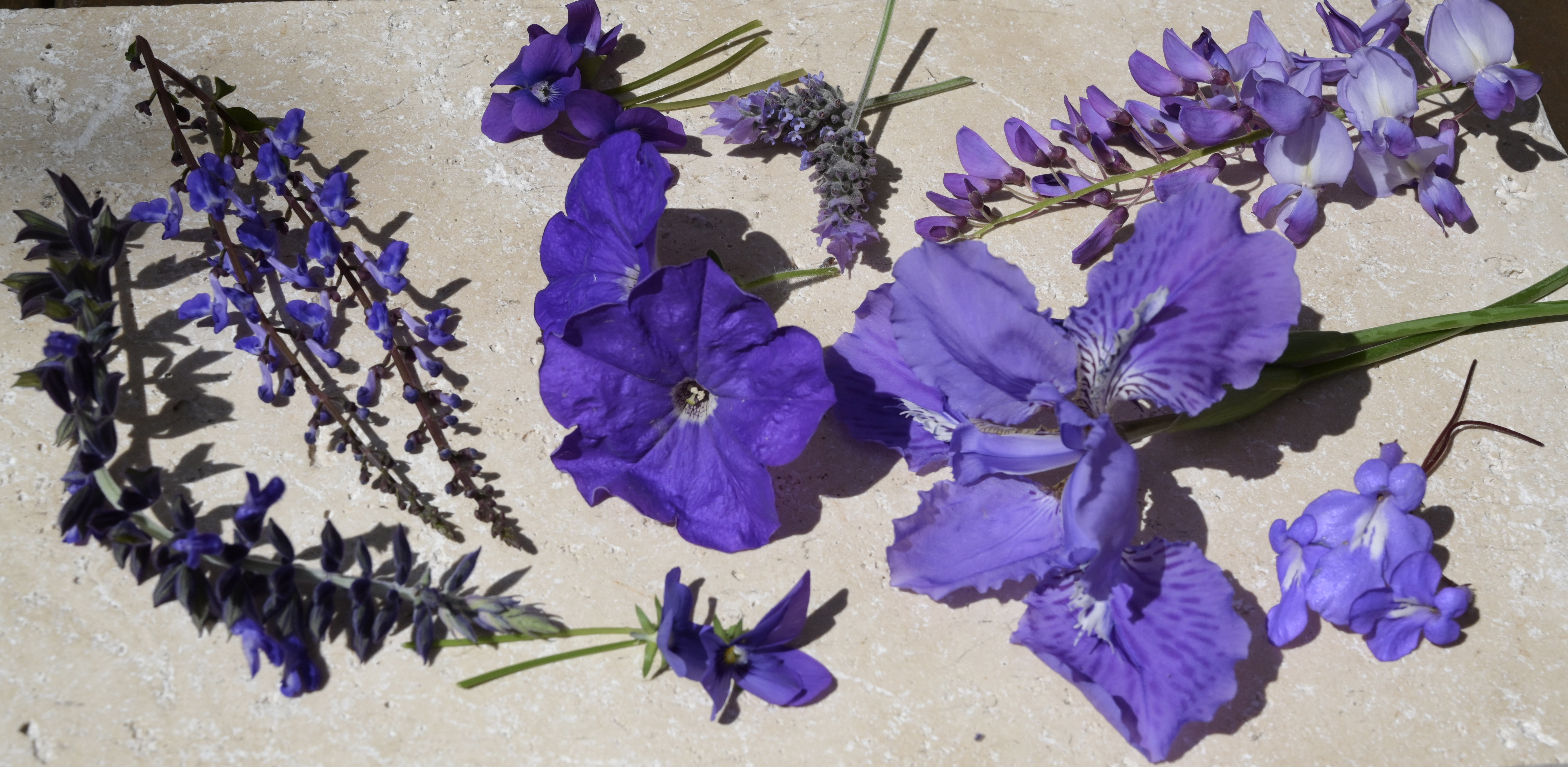
Each morning this past fortnight, I have stood in that early sunlight absorbing the delicate scents from the wisteria that surprised me with its strength in rebounding after a decimating attack by borer. New lime green leaves are sprouting from the tendrils already streaking along the wires with lacy droops of petals in varying shades from deep to palest mauve. We planted this hardy creeper to provide shade over the driveway in summer and I am so excited that this resilient vine is well on its way to doing just this.

I hear the loud song of the noisy miner where they are hidden in the leggy branches of a salvia. These long tendrils of deep almost black purple flowers are source of delight for the cheerful birds. Grown from a cutting, it has sent vigorous shoots across the garden.
I should have restrained it, pruned its branches, but how can you resist a length of blossom where the bees are feasting and butterflies landing, which give the flowers life of their own, as they land and lift off. Pruning can wait.

Under azaleas, roses and even the wisteria, I notice a profusion of intense purple violets standing high above the dark green leaves, appearing throughout the garden with more flowers than in previous years.
I have been giving away clumps of violet in a box on the footpath and picked lots of small posies for sitting in little vases on my desk. There are so many flowers, I have even resorted to coating them in sugar them which is proving a very messy task.

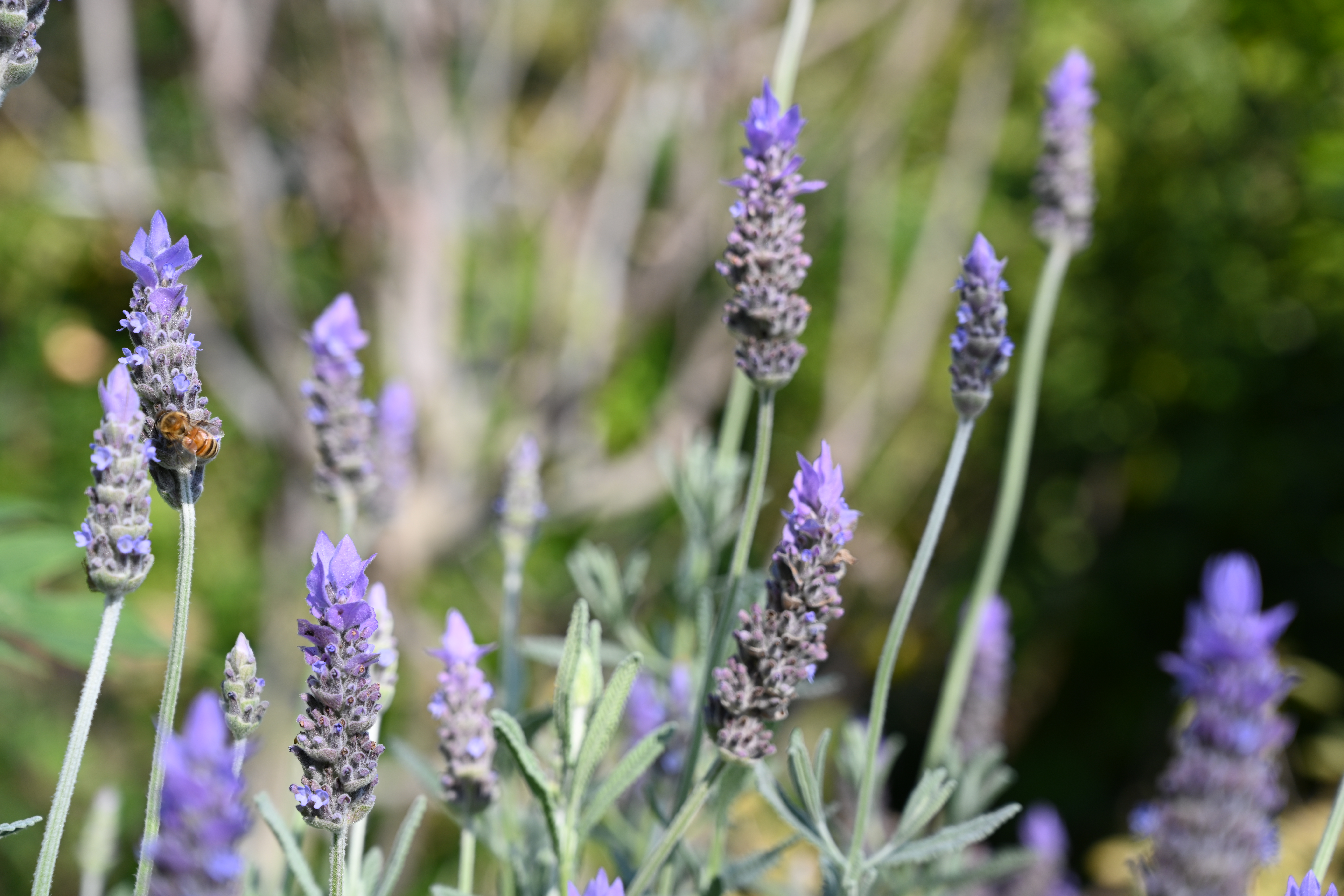
Under the magnolia trees, the French lavender planted to remind me of holidays in Europe should also have been pruned. All day its pale purple flowers are mobbed by bees so I cannot cut it now. It is far too tall for a lavender, but fortunately the pretty stalks are being supported by a white azalea. This year with all the rain we have had, everything is growing faster than it can be contained. This is the most challenging task in a garden, pruning. Not because of the time it takes but because I hate cutting a plant to discard it, even if it is only to put it into the compost or as mulch.
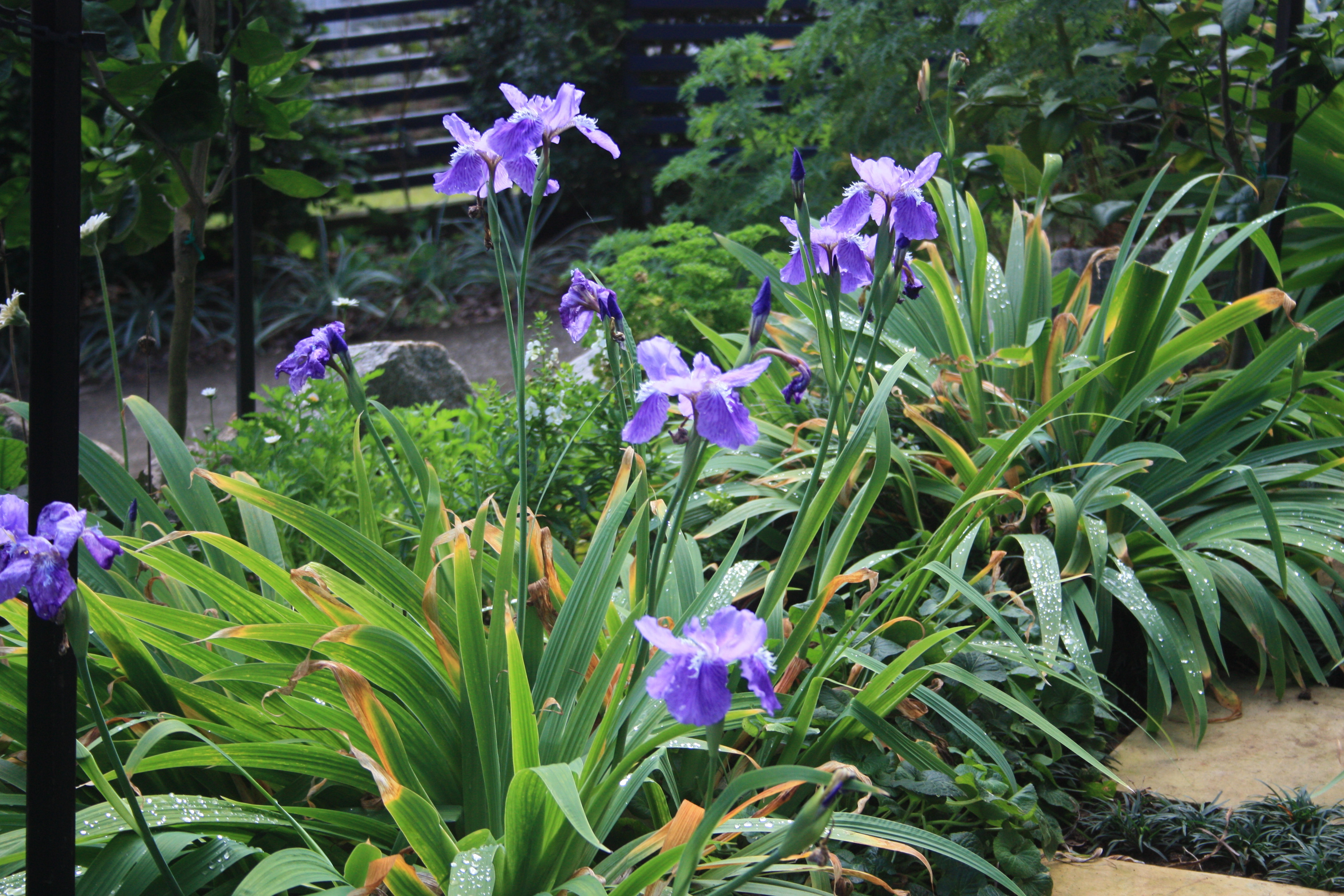
Prettiest of all, casting a blue haze over the garden, under the citrus, under the olives, in fact everywhere, is the blue Louisiana iris which have also thrived with all the rain this year. Its deep purple frilly leaves, streaked with white and gold, are a symbol of royalty, a constant reminder that this year is very special. The flower, named after Iris the Goddess of the rainbow is considered a symbol of faith, hope, wisdom and valour. Qualities that the Queen and my father displayed in ‘spades’.
Without me even planning it, this garden with its colour, scent and beauty has provided me with gentle solace as I quietly whispered farewell to my Queen and to my 96 year-old father, who died in June.

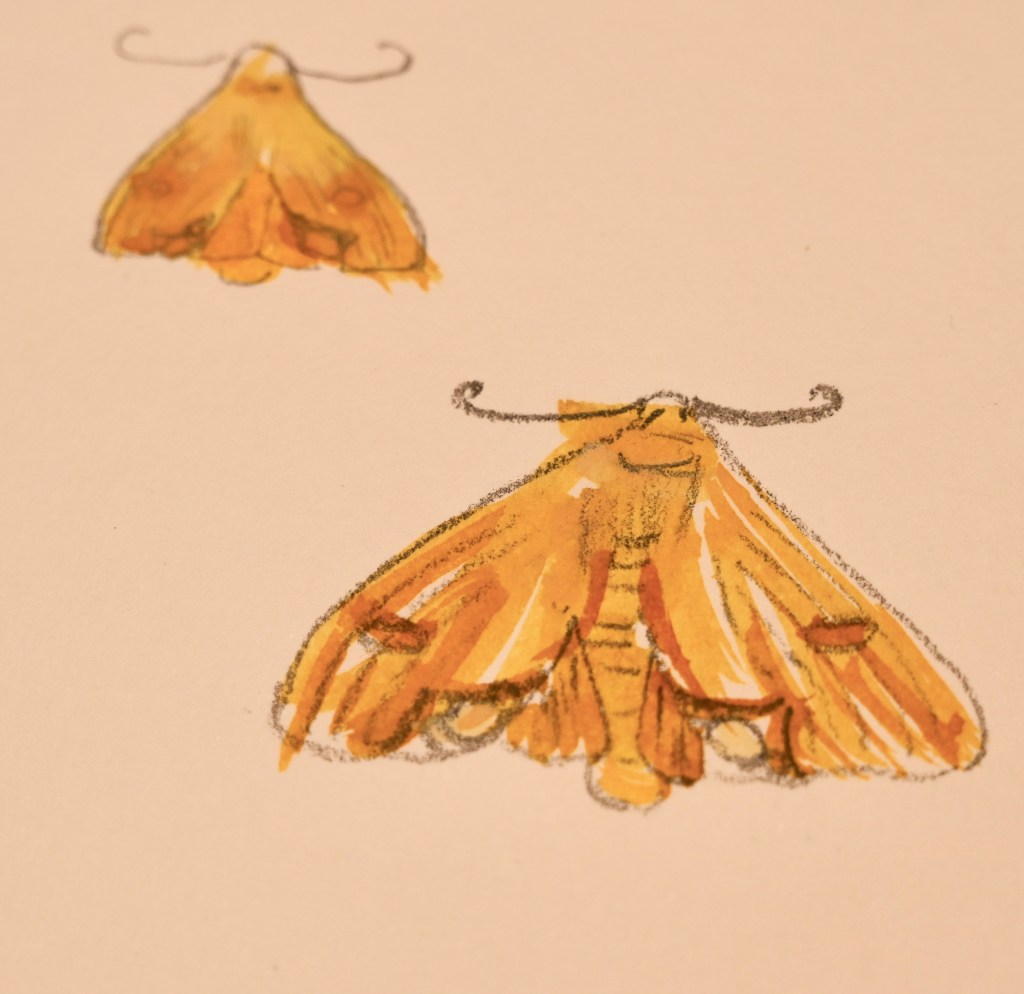
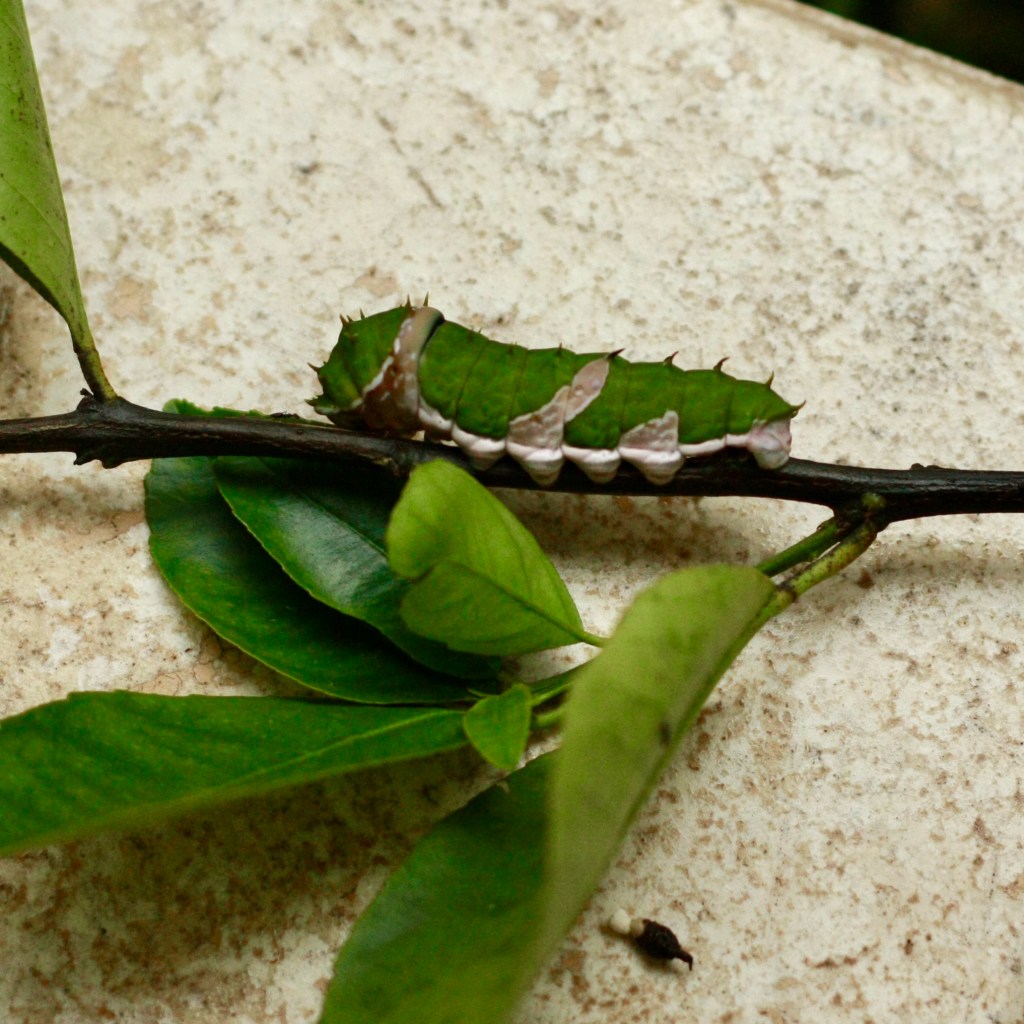



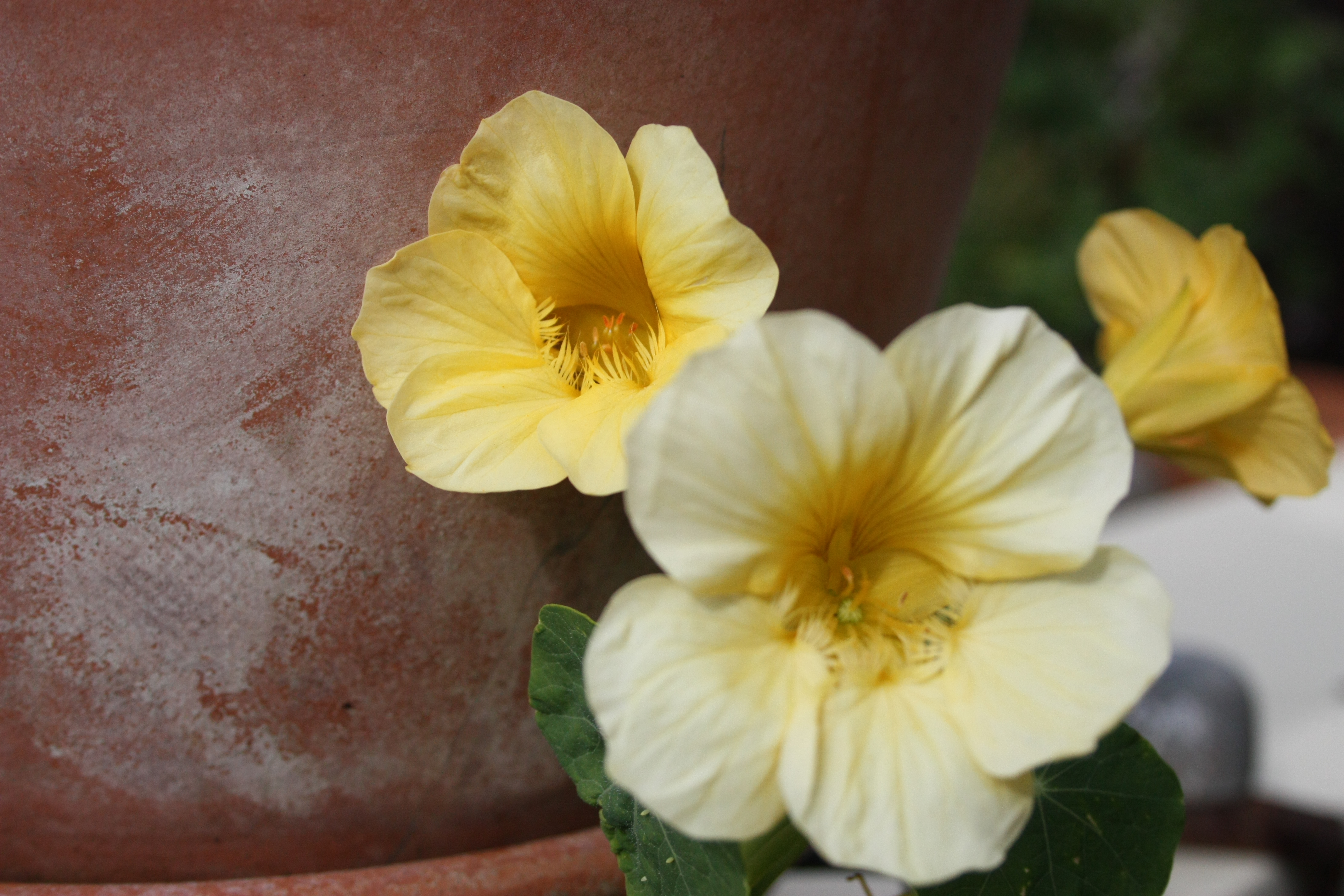


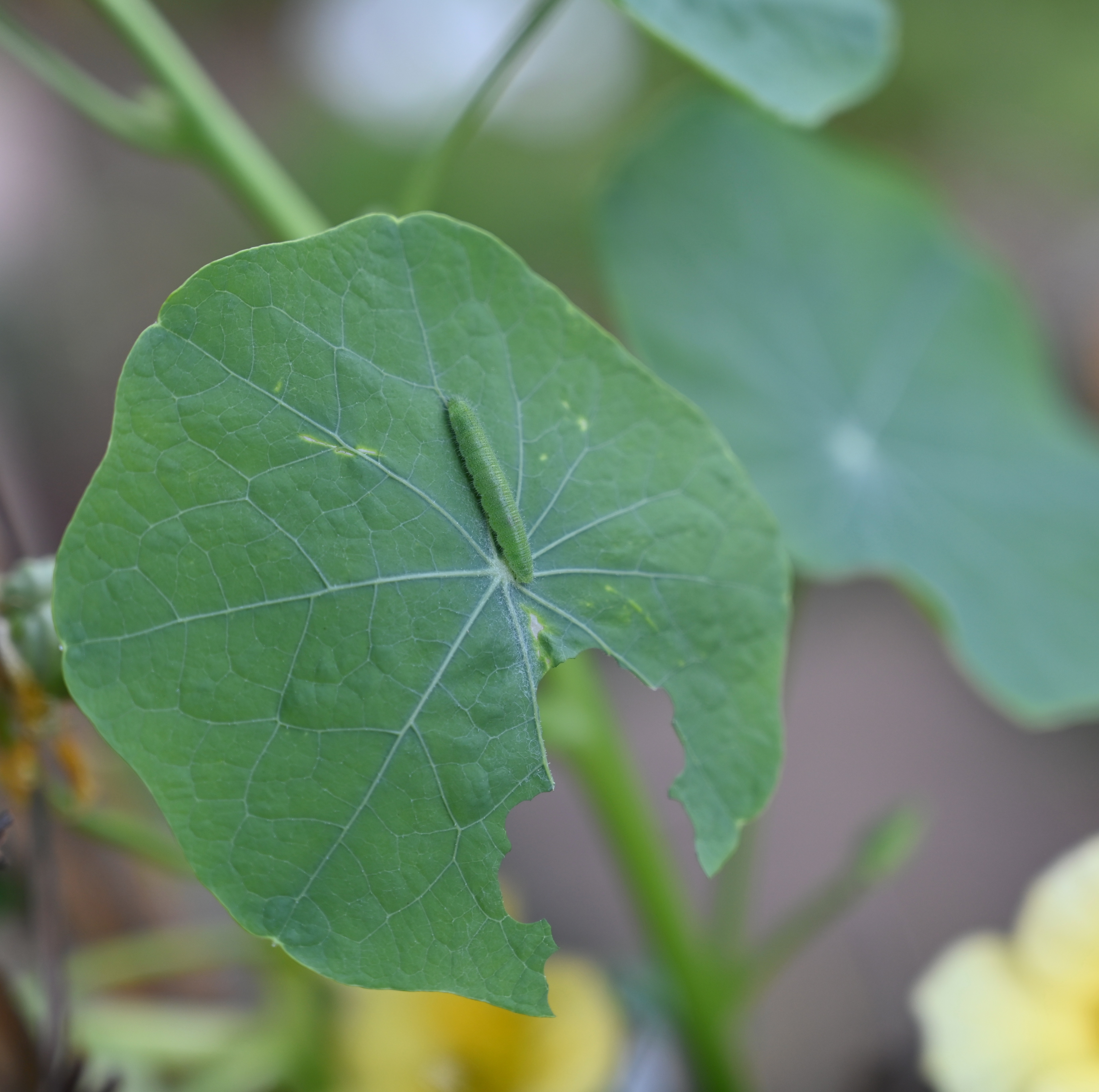


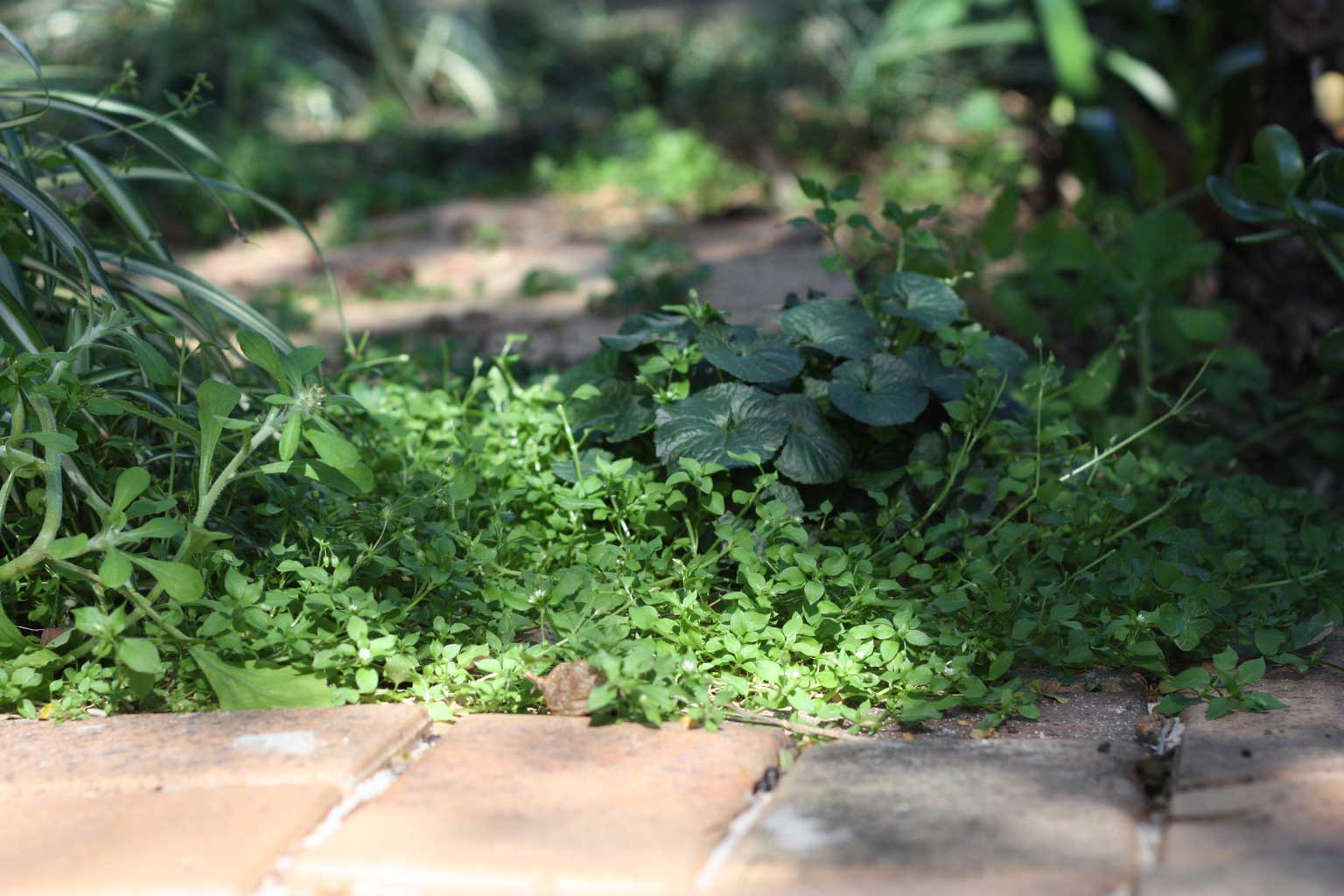 This last unknown is appearing in my hanging baskets, tumbling over my walls, and in between the pavers.
  Initially I nurtured it with water and seaweed emulsion only to have an explosion of growth suddenly start taking over the beds. Suspicion started to creep into my mind as nothing I have planted grows that quickly and I have now realised I am battling a worthy foe. Chickweed!
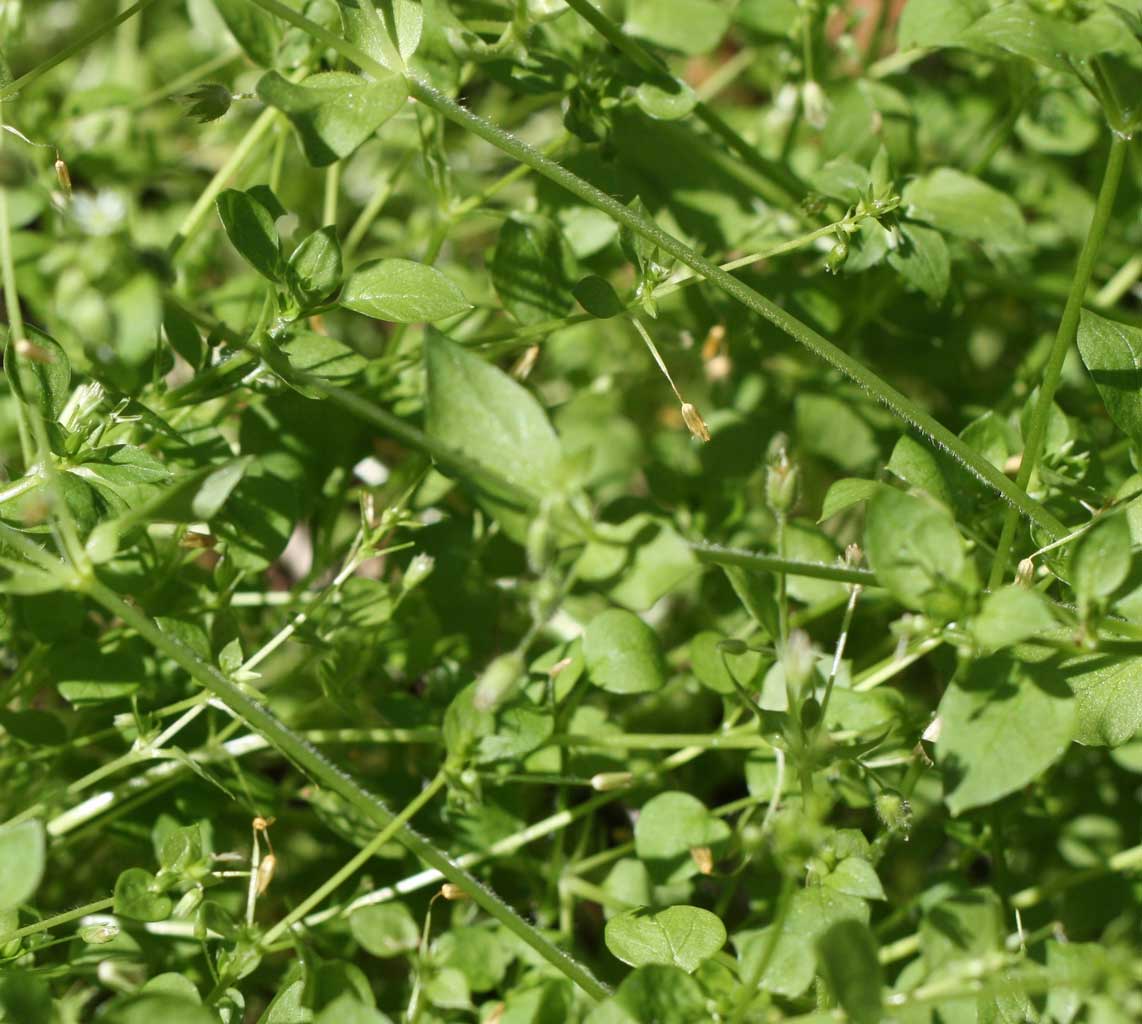 I have been on my hands and knees reaching under the roses, through the hydrangea, around the olive trees and across the brick pavers removing this fragile but tenacious weed and throwing it into the bin. Fortunately it is relatively easy to pull out but little bits still litter the garden probably preparing to haunt me in another 12 months. I have been muttering to myself, asking where did it come from. As I have been growing my own mulch (which is another story) for the past 12 months I doubted that it was from the bag of sugar cane I had used 12 months ago.
  I didn’t remain in ignorance for long as crouching under the olives I glanced across my neighbour’s neglected backyard and saw a glorious carpet of light green starting right next to my fence. The ground is covered in a tangled mass of stalks, leaves and flowers.Now I had found my source; Stellaria media commonly known as chickweed, winter weed, bindweed, satin flower, satin-flower, starweed, starwort, stitchwort, tongue grass and white bird’s eye.
 I am trying to make my garden as sustainable as possible and I hate throwing plant material out but this weed had gone to seed and I am not going to put it into the compost bin. As I threw the fourth bag away I started to wonder if it was edible. The name surely has to be a clue; I mean chickweed? I grabbed a couple of handfuls and walked through the forest to see if my son’s chooks would eat it. No problems there and they are still alive as I write. Chickweed is easy to identify with its frill of fine hairs running up one side of its stalk, changing sides at a leaf juncture.
 My father, curious about my frenetic gardening activity, wandered down to see what I was doing. I explained that having identified that this weed was not toxic to humans I was going to put some in our salad. Curious to see what it tasted like he reached down and picked off a few leaves to nibble on.
 It now definitely has a place in my diet both in salads, as an infusion and in pesto. It is also said to be useful as a poultice or tincture for skin irritations and helpful in treating obesity not that this is a problem in our household. I am really quite excited about identifying this plant and am now keen to see what else I can use from my garden’s supply of edible weeds.


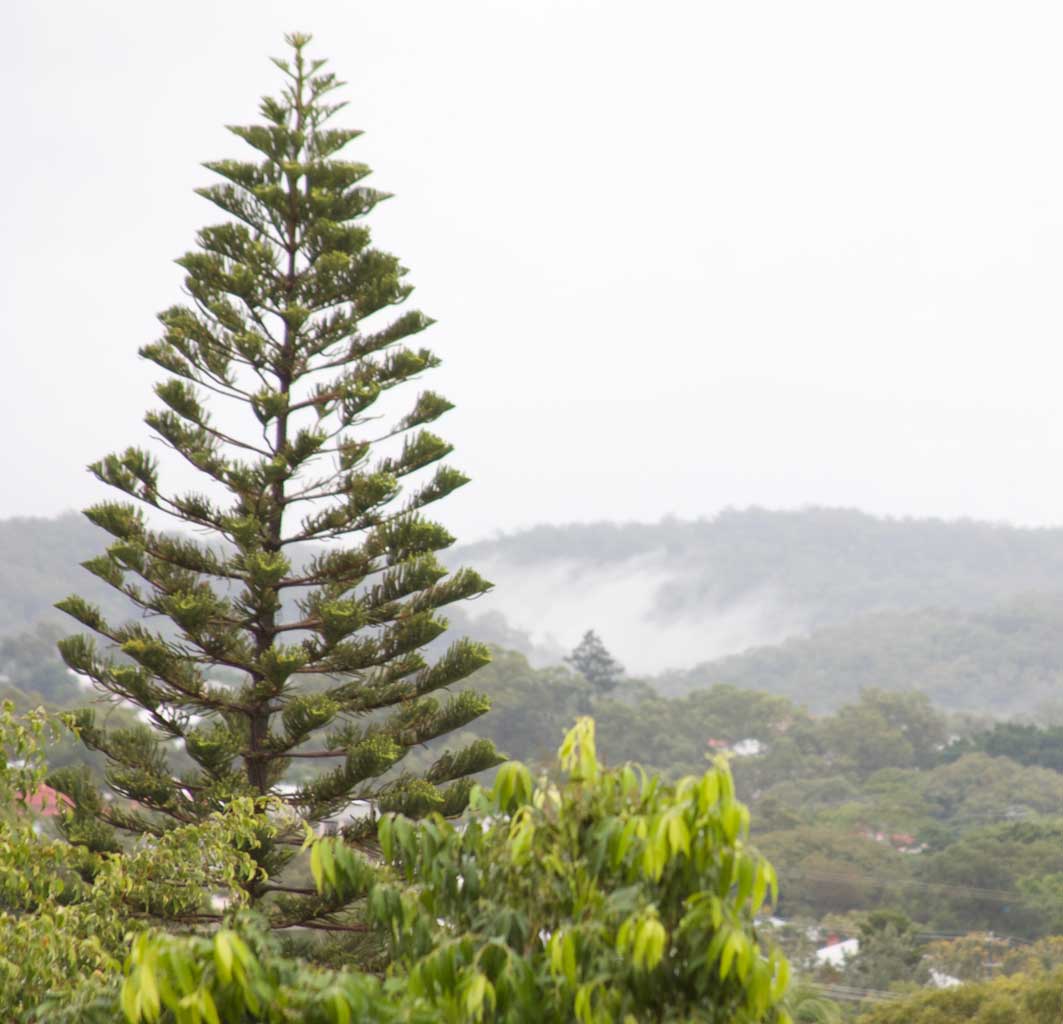
 We get excited about the leaves dropping in our cooler months. I get excited as they are a useful dry leaf matter addition to the compost bin, but my gardening assistant sees them as a chore to be swept up. I have uttered serious threats to this individual, because after sweeping up the Wisteria leaves, he tends to toss them into the rubbish bin rather than into the compost. As punishment, I have set him a task to install a light under the Frangipani to highlight its sculptural bare limbs in the evening. Now the Birch has started to drop leaves around the garden, the yellow colours mimicking the yellow paint on the house. Suddenly there are enough leaves to scrunch beneath my feet, a true sound of autumn and winter.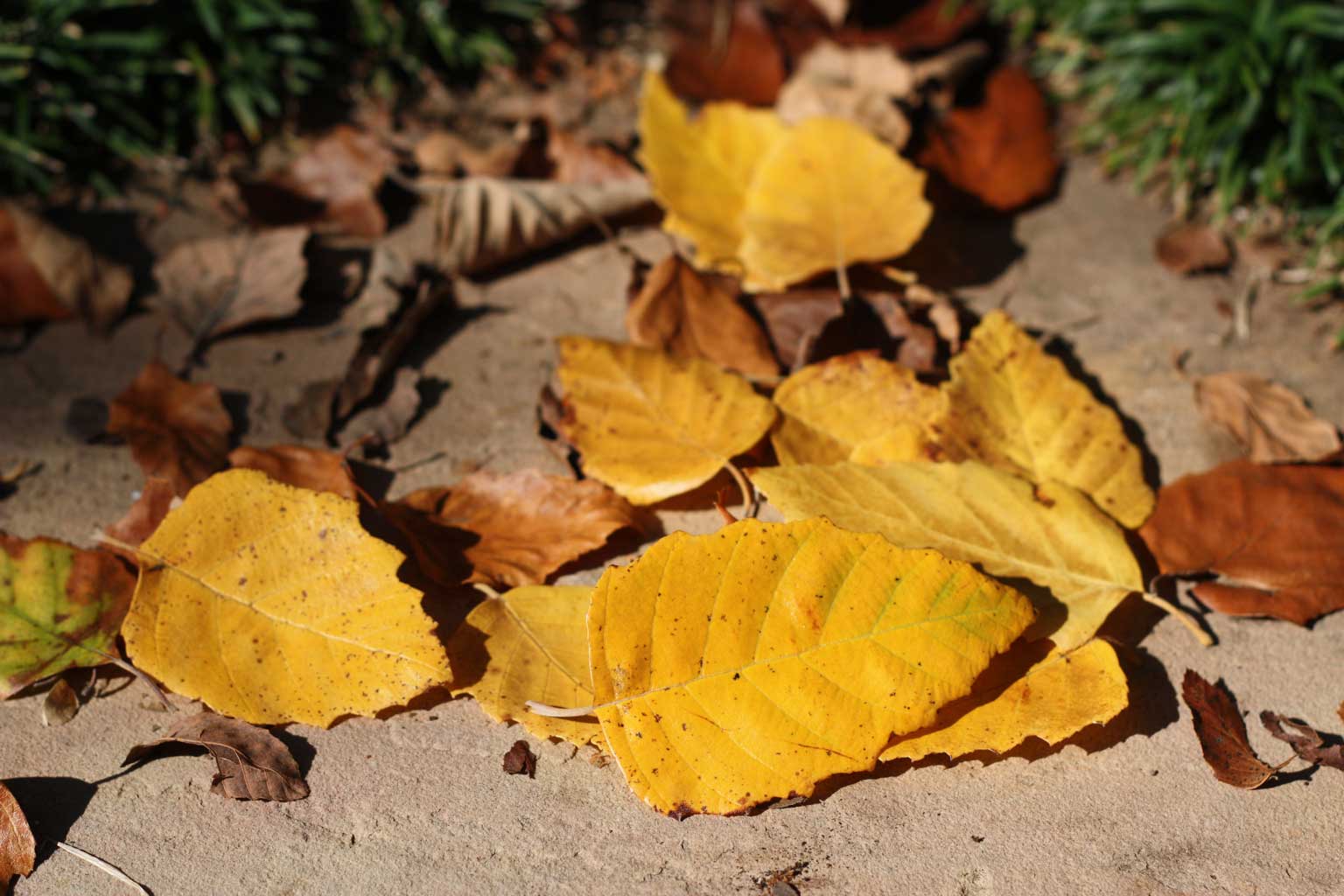

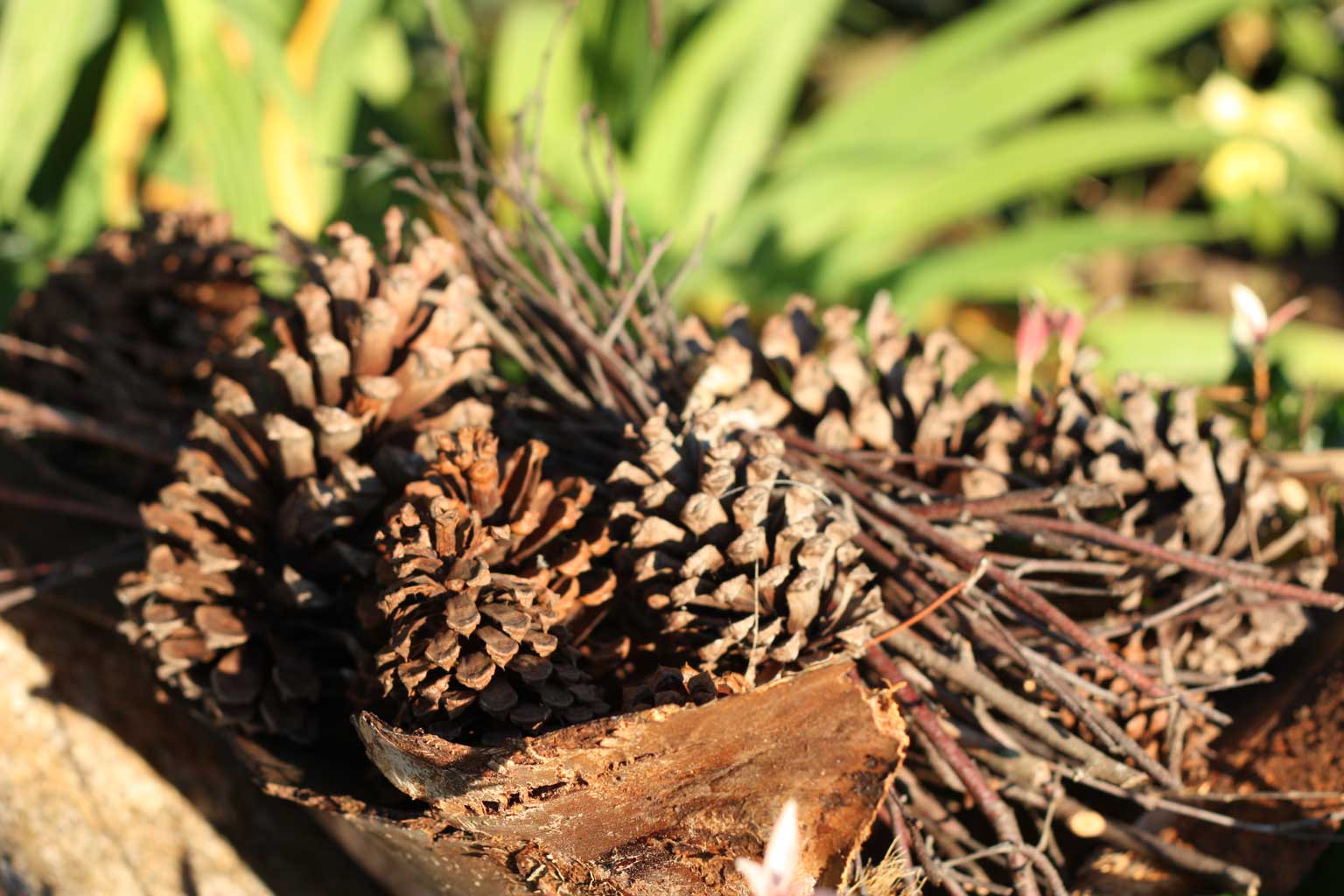



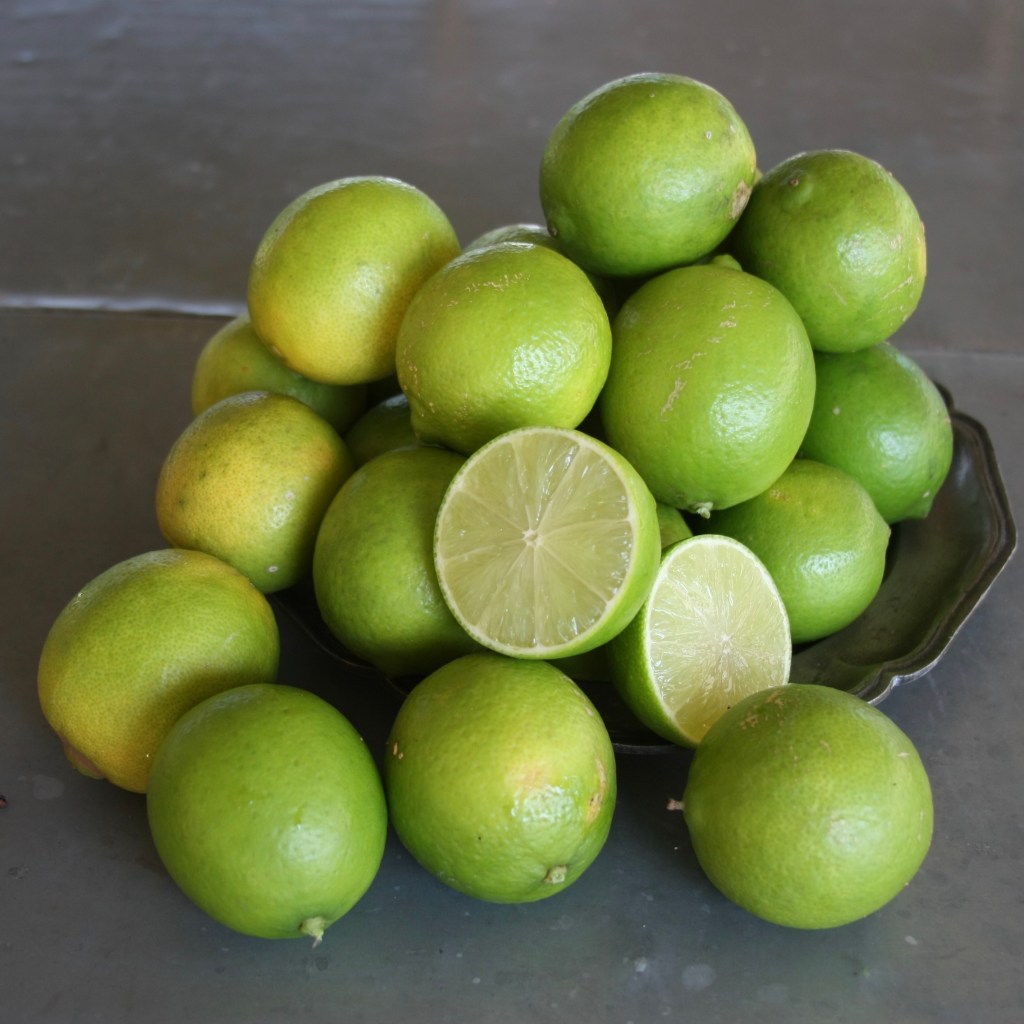
 If the thought of lemonade stalls and cool, pale green liquid in long glasses cloudy with condensation seems like a perfect way to pass warm summery days then you could be excused for thinking we are living in the northern hemisphere rather than in sub-tropical Brisbane. Our long Indian summer has delayed Autumn and it is wreaking havoc on my equilibrium. I have capitulated to the realisation that my garden will never be perfect however, this season I am experiencing citrus envy which is threatening to impair the quality of my relationship with my trees.
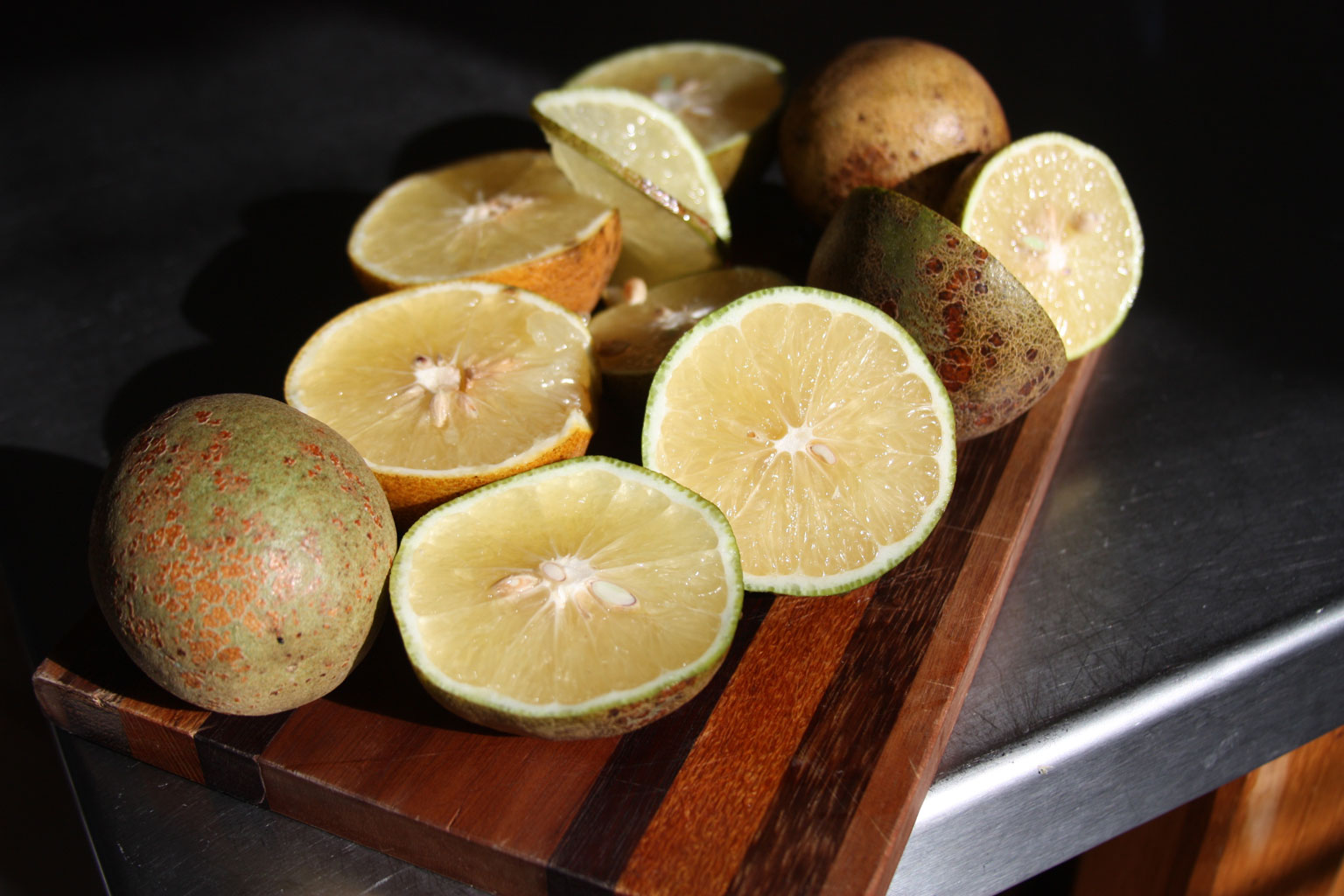
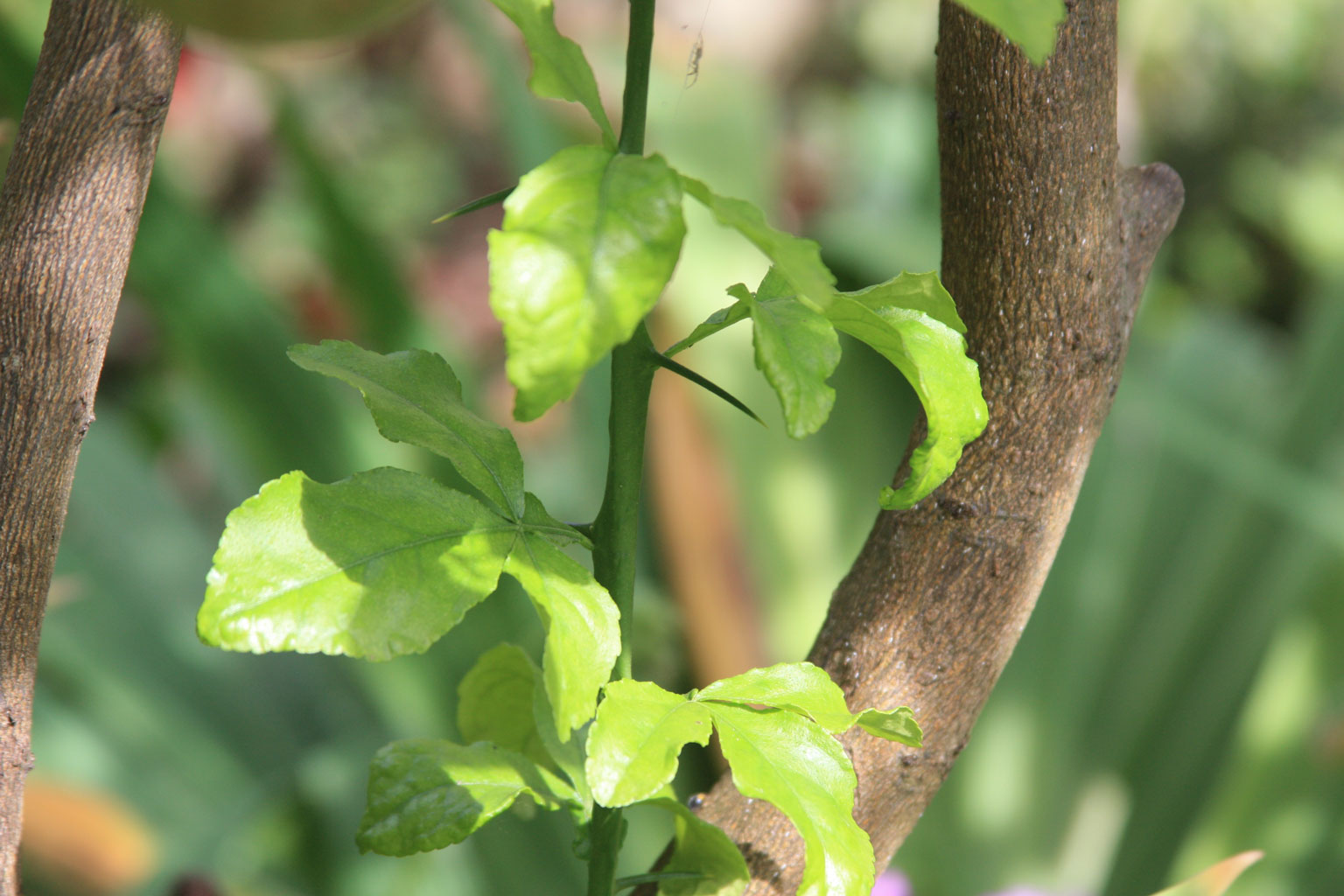 Our young tree has fruited too heavily and has a decidedly drunken lean to it but I have been reluctant to prune it. The challenge is in avoiding being impaled on its thorns which are sharp enough to use as tapestry needles. Even worse, the rootstock tends to send out rogue branches that would be a perfect material for weaving a crown of thorns. I have already suggested this as an option for the next dress up event at school and I think I am about to be reported by my daughter-in-law for cruelty to children.
 In the meantime I am enjoying fresh lemonade for breakfast.

 lorikeetlady